“We’re Not Broken” Review

“We’re Not Broken: Changing the Autism Conversation” by Eric Garcia

Garcia began writing about autism because he was frustrated by the media’s coverage of it; the myths that the disorder is caused by vaccines, the narrow portrayals of autistic people as white men working in Silicon Valley. His own life as an autistic person didn’t look anything like that. He is Latino, a graduate of the University of North Carolina, and works as a journalist covering politics in Washington D.C. Garcia realized he needed to put into writing what so many autistic people have been saying for years; autism is a part of their identity, they don’t need to be fixed.

In We’re Not Broken, Garcia uses his own life as a springboard to discuss the social and policy gaps that exist in supporting those on the spectrum. From education to healthcare, he explores how autistic people wrestle with systems that were not built with them in mind. At the same time, he shares the experiences of all types of autistic people, from those with higher support needs, to autistic people of color, to those in the LGBTQ community. In doing so, Garcia gives his community a platform to articulate their own needs, rather than having others speak for them, which has been the standard for far too long.

Review

I originally read this back in 2022 sometime after it came out in 2021 and wanted to re-read it now both to do a review for it and also because of the current political rhetoric around autism. I really like the way Eric Garcia took the time to explain why and how he wanted to write this book. There was a good variety of people represented in this book from across the spectrum of support needs as well as gender and race.

Garcia also makes a point of saying how people can have different needs but often assumptions are made about who needs what supports to be successful. He emphasizes that Autistic individuals who succeed don’t “overcome” their autism but rather succeed because they are given the proper supports throughout their lives. There was a lot of discussion about being willing to seek out support along with the fear that needing support means one is not capable of being out in the world which can hinder actually getting support.

The book is divided into several categories including those for work, education, housing, gender, and race and in each one Garcia both tells his own experiences and also shares the experiences of others. Again, each section does a good job of showing a range of experiences. I particularly appreciated the first chapter which outlined a lot of the history of autism and how it has been viewed over the years. It’s a bit weird reading this book now during the second Trump presidency when it was written during the first and some policy decisions were made at that time.

I also appreciated the gender and race sections of the book, which illustrated why there is seemingly such an increase in diagnosis over the years. Girls, non-binary, and trans individuals are often overlooked as many traits are assumed to be more about gender (like being shy) than anything else. Also, with regard to race, there was a point in time when it was assumed only white boys were autistic (mostly due to the way studies were conducted), while Black and Brown children were given different diagnoses, such as Oppositional Defiant Disorder.

Overall, I think Garcia does a great job highlighting the various issues that autistic people face and the ways that assumptions have been made across the spectrum with regard to ability and how best to support autistic people. There is some good discussion about the conflicts that can exist between parent advocates and self-advocates. Nearly always, parents want to do best by their children, but sometimes the idea of finding a cure can cause more harm than good. Often, the push for a cure comes at the expense of actually providing care and support to the children and adults that currently exist. And this is true for a lot of different disabilities where better supports would be appreciated more than finding a cure.

Book Details
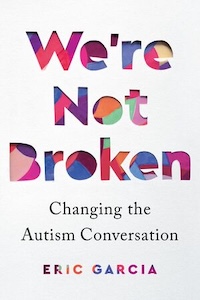
The book cover is a sold white background with the title written one word per line down the center. The letters of the title are colored in different colored sections: orange, pink, purple, green, blu and red. The subtitle is under the main title in solid black and then the authors name is at the bottom with the same color patterns.

Author’s Website
Eric Garcia
Publisher / Date
Harvest Publications, August 2021
Genre
Essay Collection
Page Count
304
Completion Date
April 21, 2025

“Never Say You Can’t Survive” Review

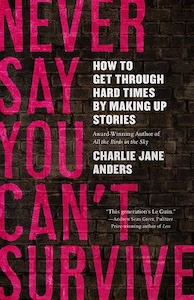
“Never Say You Can’t Survive: How to Get Through Hard Times by Making Up Stories” by Charlie Jane Anders

The world is on fire.

So tell your story.

Things are scary right now. We’re all being swept along by a tidal wave of history, and it’s easy to feel helpless. But we’re not helpless: we have minds, and imaginations, and the ability to visualize other worlds and valiant struggles. And writing can be an act of resistance that reminds us that other futures and other ways of living are possible.

Full of memoir, personal anecdote, and insight about how to flourish during the present emergency, Never Say You Can’t Survive is the perfect manual for creativity in unprecedented times.

Review

I really enjoyed reading this. There was a lot of great writing advice in this book, with a lot of details and explanations. I also liked that the author included her own experiences in the book to help explain things. It’s not quite a memoir, but it’s also more than simply a guidebook on how to write good stories. The author also did a good job talking about why it can be important to write stories during hard times, as stories can get us through those times. While I’m not a fiction writer (yet), I did enjoy reading all of the advice, and I think it will be helpful in figuring out what I do want to work on writing.

Book Details

The book cover has the background of a black brick wall with the title of the book written in transparent hot pink text down the left side of the cover one word at a time. The subtitle and authors name are in the center right of the cover in white text.

Author’s Website
Charlie Jane Anders
Publisher / Date
Tor.com, August 2021
Genre
Essay Collection, Guidebook
Page Count
288
Completion Date
March 22, 2025

“Disposable” Review

“Disposable: America’s Contempt for the Underclass” by Sarah Jones

In the tradition of Matthew Desmond’s Evicted and Andrea Elliot’s Invisible Child, Disposable is a poignant exploration of America’s underclass, left vulnerable by systemic racism and capitalism. Here, Sarah Jones delves into the lives of the essential workers, seniors, and people with disabilities who were disproportionately affected by COVID-19—not due to their age or profession, but because of the systemic inequality and poverty that left them exposed.

The pandemic served as a stark revelation of the true state of America, a country where the dream of prosperity is a distant mirage for millions. Jones argues that the pandemic didn’t create these dynamics, but rather revealed the existing social mobility issues and wealth gap that have long plagued the nation. Behind the staggering death toll are stories of lives lost, injustices suffered, and institutions that failed to protect their people.

Jones brings these stories to the forefront, transforming the abstract concept of the pandemic into a deeply personal and political phenomenon. She argues that America has abandoned a sacrificial underclass of millions but insists that another future is possible. By addressing the pervasive issues of racial justice and public policy, Jones calls for a future where no one is seen as disposable again.

Review

This was a really good look at the various issues around COVID disparities and the vastly different outcomes because of race, disability and/or poverty. I felt like the author did a great job using various peoples’ stories to showcase all the different situations and outcomes. I also liked that the author discussed the issues with congregate settings and how people in those settings were basically doomed by COVID. There was a good focus on all kinds of congregate settings from people with Intellectual Disabilities in group homes, to elderly individuals in nursing homes to individuals in prisons and jails. There was also a good discussion about the way various jobs didn’t allow for any precautions to be taken and people were forced to work while sick or risk being fired because there’s no paid sick time for many.

There’s also the emphasis on how if you don’t have money or status and can’t work you’re not seeing as worthy. The rich and powerful only care about money and staying in power. The way things opened back up quickly just highlighted how much people cared more about the economy than people. I also liked the fact that the author didn’t shy away from saying that COVID is still a major problem and that people are still getting sick and dying from it. We never should have tried to return to normal because normal doesn’t exist anymore.

Book Details

The cover of Disposable has a black and white image of an empty country road with light posts and trees on the side and wires going across. There is an American flag floating in the air upside down and partially folded over under a dark cloudy sky. The title is at the top with the authors name at the bottom.

Author’s Website
Sarah Jones (Blue Sky)
Publisher / Date
Avid Reader Press / Simon & Schuster, February 2025
Genre
Essay Collection, Disability, COVID
Page Count
295
Completion Date
March 16, 2025

“The Future Is Disabled” Review

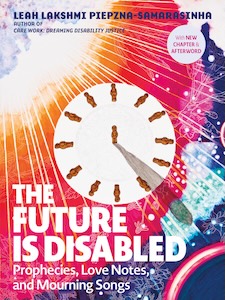
“The Future Is Disabled: Prophecies, Love Notes and Mourning Songs”
by Leah Lakshmi Piepzna-Samarasinha

In The Future Is Disabled, Leah Laksmi Piepzna-Samarasinha asks some provocative questions: What if, in the near future, the majority of people will be disabled – and what if that’s not a bad thing? And what if disability justice and disabled wisdom are crucial to creating a future in which it’s possible to survive fascism, climate change, and pandemics and to bring about liberation?

Building on the work of their game-changing book “Care Work: Dreaming Disability Justice”, Piepzna-Samarasinha writes about disability justice at the end of the world, documenting the many ways disabled people kept and are keeping each other – and the rest of the world – alive during Trump, fascism and the COVID-19 pandemic. Other subjects include crip interdependence, care and mutual aid in real life, disabled community building, and disabled art practice as survival and joy.

Written over the course of two years of disabled isolation during the pandemic, this is a book of love letters to other disabled QTBIPOC (and those concerned about disability justice, the care crisis, and surviving the apocalypse); honor songs for kin who are gone; recipes for survival; questions and real talk about care, organizing, disabled families, and kin networks and communities; and wild brown disabled femme joy in the face of death. With passion and power, The Future Is Disabled remembers our dead and insists on our future.

Review

The basic concept of this book is that we’d all be a lot better off if we learned how to care about each other and to take care of each other without getting caught up in our differences. Not that it’s ever easy – there’s a whole chapter on why even people with good intentions in the disability community doing disability justice work can cause harm to each other. But the basic fact remains if we worked together instead of fighting each other we be better off. The book was written during the first Trump presidency and the points made in the book matter even more now during the second.

It also makes the point that we often forget how vastly different our experiences can be. COVID impacted people very differently and while many people were stuck at home bored others were dealing with the deaths of friend and family on a near daily bases. COVID never actually ended and yet everyone wanted to go back to normal. Normal doesn’t exist and often disabled people are the first to learn how to adapt to a new world. Now is the time to learn.

Book Details

The book cover has a bright light at the top left corner which shines white, orange, red, purple to the bottom right where it's a darker blue/black. In the center of the cover is a sundial but the numbers are figures of people with a person standing in the center showing a shadow towards the bottom right corner.  The title is positioned at the bottom left corner with the authors name at the top.

Author’s Website
Leah Lakshmi Piepzna-Samarasinha
Publisher / Date
Arsenal Pulp Press, October 2022
Updated 2023 edition includes a new chapter and afterword by the author
Genre
Memoir, Essay Collection, Disability
Page Count
334
Completion Date
March 9, 2025

“He/She/They” Review

“He/She/They: How We Talk About Gender and Why It Matters” by Schuyler Bailar

Go‑to expert on gender identity, Schuyler Bailar, offers an essential, urgent guide that changes the conversation about gender identity and how we talk about it.

He/She/They uses storytelling and the art of conversation to give us the fundamental language and context of gender so that we can meet people where they are and pave the way to understanding, acceptance, and inclusion.

As a transgender man, inclusion advocate, and LGBTQ+ educator, Schuyler Bailar is more than familiar with the myriad questions that come up. In He/She/They, he addresses them head on, such as why being transgender is not a choice, why pronouns are important, and what is biological sex. But this book is more than a book on allyship; many of Schuyler’s vast followers come to him for support; one of his most popular reels is speaking to a young trans person who asks, “does it get better?”

He/She/They is an essential, urgent, and potentially life-saving book that will change the conversation about gender identity and how we talk about it, moving us toward a more equitable future.

Review

I really enjoyed reading this book. Schuyler did a really good job using both his personal story and additional facts about being trans to provide a lot of information. There was as lot of good information about what being Trans means and how gender is never as simple as male or female. He also had a lot of discussion about the discrimination Trans individuals face and how the sports and bathroom bans are a lot of manufactured outrage. He tells his own story about being a swimmer along with another trans athlete and how all the outrage is ridicule in the face of actual facts about their stats and the stats of other athletes in competition. I also like how Schuyler outlines various ways to handle working with other people to help them understand and how to respond to transphobic comments. The stories that Schuyler told about his own history were great too and I really enjoyed hearing about how his Korean family members responded to his transition. There are a lot of important things about this book and I think everyone should read it.

Additional reviews and warnings can be found on the StoryGraph page for “He/She/They”.

Book Details

The book cover is blue and is mostly taken up by the title of the book which is written in large font one word at a time on each line. Schuyler, a brown skinned Korean man with short black hair and a mustache wearing a white shirt and black pants  is sitting with his arms on his knees with his hands clasped in front of him.

Author’s Website
Schuyler Bailar

Publisher / Date
Hachette Go, October 2023
Genre
Non-Fiction, Essay Collection
Page Count
384
Completion Date
February 16, 2025

“Crip Up the Kitchen” Review

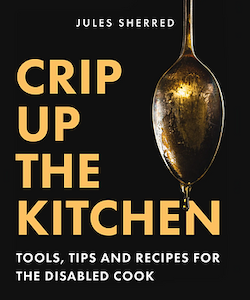
“Crip Up the Kitchen: Tools, Tips, and Recipes for the Disabled Cook” by Jules Sherred

A comprehensive guide and recipe collection that brings the economy and satisfaction of home cooking to disabled and neurodivergent cooks.

cripping / crip up: A term used by disabled disability rights advocates and academia to signal taking back power, to lessen stigma, and to disrupt ableism as to ensure disabled voices are included in all aspects of life.

When Jules Sherred discovered the Instant Pot multicooker, he was thrilled. And incensed. How had no one told him what a gamechanger this could be, for any home cook but in particular for those with disabilities and chronic illness? And so the experimenting―and the evangelizing―began.

The kitchen is the most ableist room in the house. With 50 recipes that make use of three key tools―the electric pressure cooker, air fryer, and bread machine―Jules has set out to make the kitchen accessible and enjoyable. The book includes pantry prep, meal planning, shopping guides, kitchen organization plans, and tips for cooking safely when disabled, all taking into account varying physical abilities and energy levels.

Organized from least to greatest effort (or from 1 to “all your spoons,” for spoonies), beginning with spice blends and bases, Jules presents thorough, tested, inclusive recipes for making favourites like butter chicken, Jules’s Effin’ Good Chili, Thai winter squash soup, roast dinners, matzo balls, pho, samosas, borshch, shortbread, lemon pound cake, and many more.

Jules also provides a step-by-step guide to safe canning and a template for prepping your freezer and pantry for post-surgery. With rich accompanying photography and food histories, complete nutritional information and methods developed specifically for the disabled and neurodivergent cook, Crip Up the Kitchen is at once inviting, comprehensive, and accessible. If you’ve craved the economy and satisfaction of cooking at home but been turned off by the ableist approach of most cookbooks―this one’s for you!

Review

I really enjoyed reading through this cookbook and all the different tips in it. There is a great chapter about different types of disabilities and how the book can help. There are also tips for what items you should by and have available too you, grouped into least expensive to more expensive if you can get it and why these things will be helpful. My favorite chapters are the ones about how to organize your kitchen and pantry areas to make everything easier to work with and the meal planning / meal prep chapters. I think there’s a lot of good information to be had in these sections before even getting to the recipes. As for the recipes I like that there is an introduction chapter for how to use the various equipment (Pressure Cooker/Air Fryer). The recipes themselves are organized well and I really like the details and stories with the recipes – the author includes some good history lessons for many of them.

Book Details

Crip up the Kitchen Book Cover - the cover is black with a spoon that takes up most of the upper right side of the cover. There is some sort of thick liquid on the spoon dripping off of it. The title of the book takes up most of the rest of the cover in yellow with the subtitle in white at the bottom. The author's name is at the top.

Author’s Website
Jules Sherred
Publisher / Date
Touchwood Editions, May 2023
Genre
Guidebook, Cookbook
Page Count
272
Completion Date
October 10, 2024